

The World Health Organization (WHO) is marking World Cervical Cancer Elimination Day with renewed calls for governments, healthcare professionals and communities to expand human papillomavirus (HPV) vaccination, cervical cancer screening and access to timely treatment.
Observed annually on November 17, the global health campaign is taking place under the theme “Together We Can Eliminate Cervical Cancer”, with a renewed international commitment running from 2026 through 2030.
The initiative aims to accelerate progress towards eliminating cervical cancer as a public health problem by ensuring that more girls receive HPV vaccination, more women undergo regular screening and those diagnosed with cervical disease receive appropriate treatment.
WHO says cervical cancer remains one of the most preventable forms of cancer, yet unequal access to healthcare continues to expose millions of women to avoidable illness and death.
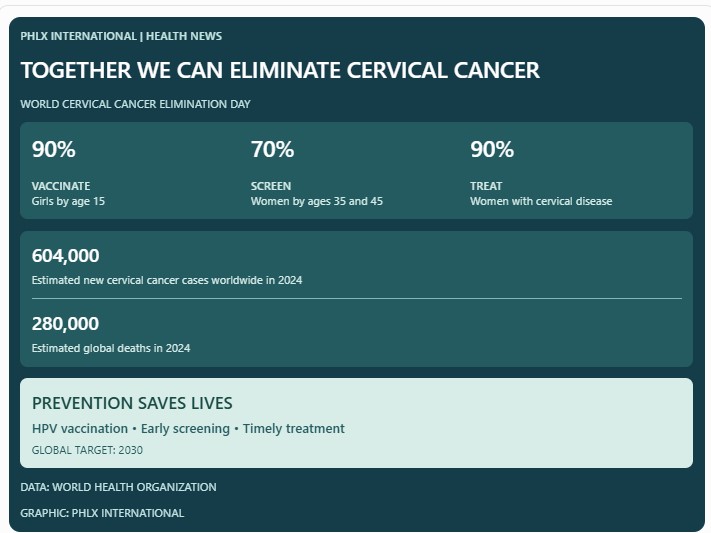
The organisation’s latest estimates indicate that approximately 604,000 new cervical cancer cases and 280,000 deaths occurred worldwide in 2024.
The burden is particularly severe in low- and middle-income countries, where access to vaccination, screening, diagnostic services and cancer treatment remains limited.
WHO is therefore urging governments to move beyond awareness campaigns and strengthen the healthcare systems required to deliver prevention and treatment services to women and girls who have historically been underserved.
WHO Highlights Major Gaps in Cervical Cancer Screening
One of the most significant challenges identified by WHO is the limited availability of cervical cancer screening.
In a November 17 update marking this year’s elimination day, the organisation reported that three in five women aged 30–49 worldwide have never been screened for cervical cancer.
The figures also reveal substantial inequalities in access to HPV-based screening.
According to WHO estimates, only 2 per cent of women in low- and middle-income countries underwent HPV testing in the preceding five years, compared with 32 per cent in high-income countries.
The difference highlights the extent to which a woman’s access to preventive healthcare can depend on where she lives and the resources available within her country’s health system.
HPV-based screening is important because persistent infection with certain high-risk types of human papillomavirus can cause changes in cervical cells that may eventually develop into cancer.
Detecting these changes before cancer develops allows healthcare professionals to offer treatment that can prevent the disease from progressing.
WHO has therefore called on countries to bring screening services closer to women who have never been reached, particularly those in underserved communities.
The organisation also emphasised that screening must be connected to timely diagnosis, treatment and follow-up.
Identifying an abnormal screening result is not sufficient if women cannot access the subsequent medical services they need.
Understanding WHO’s 90–70–90 Targets for 2030
At the centre of the global elimination campaign is WHO’s 90–70–90 strategy, which establishes three measurable targets that countries should achieve by 2030.
The strategy was adopted by 194 countries in November 2020 as part of the global commitment to eliminate cervical cancer as a public health problem.
The targets are:
1. Vaccinate 90 per cent of girls against HPV by age 15.
Countries are expected to ensure that 90 per cent of girls receive the recommended HPV vaccination by their fifteenth birthday.
The vaccine protects against the high-risk HPV infections responsible for most cervical cancer cases.
Vaccinating girls before exposure to the virus is an important part of preventing future disease.
2. Screen 70 per cent of women using high-performance tests by ages 35 and 45.
The strategy requires countries to ensure that 70 per cent of women receive high-performance cervical screening by the age of 35 and again by the age of 45.
Screening allows healthcare professionals to identify HPV infections or abnormal cervical cells before they progress to invasive cancer.
3. Ensure 90 per cent of women with cervical disease receive appropriate treatment.
The final target requires 90 per cent of women identified with cervical precancer to receive treatment and 90 per cent of women diagnosed with invasive cervical cancer to receive appropriate management.
This includes access to the medical services necessary for diagnosis, treatment and continuing care.
WHO says achieving the three targets would place countries on the pathway towards eliminating cervical cancer as a public health problem.
The organisation defines elimination as reducing the annual incidence of new cases to fewer than four per 100,000 women.
Importantly, elimination does not mean that every individual case of cervical cancer will disappear. It means reducing the disease to a level at which it no longer represents a major public health problem.
HPV Vaccination Remains Central to Prevention
Human papillomavirus is a common infection transmitted primarily through intimate skin-to-skin contact.
Most infections clear naturally, but persistent infection with certain high-risk HPV types can cause abnormal changes in cervical cells.
Almost all cervical cancer cases are associated with persistent infection by cancer-causing HPV types.
The HPV vaccine is therefore one of the most important tools available for preventing cervical cancer.
WHO recommends HPV vaccination for girls aged 9–14, before they are exposed to the virus.
Depending on the national immunisation schedule, vaccination may involve one or two doses. People with compromised immune systems, including those living with HIV, may require additional doses under applicable recommendations.
The vaccines protect against high-risk HPV types, including types 16 and 18, which are responsible for approximately 76 per cent of cervical cancers.
However, vaccination does not replace cervical screening.
Women who have received HPV vaccination may still need regular screening because the vaccines do not protect against every cancer-causing HPV type.
WHO is encouraging governments to strengthen routine immunisation programmes, improve vaccine availability and address misinformation that discourages parents and communities from accepting HPV vaccination.
The organisation also emphasises the importance of reaching girls who are not enrolled in school or who live in communities where routine healthcare services are difficult to access.
Why Cervical Cancer Screening Must Reach More Women
Cervical cancer screening is designed to identify women who may have HPV infections or abnormal cervical cells requiring further assessment.
High-performance HPV tests can identify infections associated with an increased risk of developing cervical cancer.
WHO recommends regular screening beginning at age 30 for most women and age 25 for women living with HIV, in accordance with applicable screening guidance.
The global strategy encourages at least two lifetime screenings using a high-performance test, by ages 35 and 45.
Women who have received HPV vaccination should also continue to follow the recommended screening schedule.
An important advantage of early detection is that precancerous changes can often be treated before they develop into invasive cancer.
Depending on the findings, healthcare professionals may recommend additional examination, treatment of abnormal cervical tissue or further diagnostic procedures.
WHO also recognises the value of self-collection for HPV testing, which can offer women an additional way to participate in screening programmes.
Self-collection can be particularly helpful in communities where cultural concerns, embarrassment, distance or limited healthcare facilities discourage women from attending conventional screening services.
However, a positive screening result still requires appropriate follow-up and clinical assessment.
Africa Accounts for a Significant Share of the Global Burden
Cervical cancer remains a major public health challenge across Africa.
In a November 17 message for World Cervical Cancer Elimination Day, WHO Regional Director for Africa Dr Mohamed Janabi said an estimated 117,493 women developed cervical cancer in the WHO African Region in 2024, while approximately 69,600 died from the disease.
The figures make cervical cancer the second most common cancer among women in the African Region, accounting for approximately one in five female cancer cases.
WHO attributes the continuing burden partly to unequal access to HPV vaccination, cervical screening, diagnosis and treatment.
Women in rural communities and economically disadvantaged households may face additional difficulties accessing specialised cancer services.
Other challenges include limited screening facilities, shortages of trained healthcare professionals, inadequate diagnostic equipment and difficulties accessing treatment after an abnormal screening result.
Women living with HIV also face increased vulnerability.
WHO estimates that women living with HIV are approximately six times more likely to develop cervical cancer than women without HIV.
The organisation is therefore encouraging African governments to integrate cervical cancer prevention into existing primary healthcare and HIV services.
It also wants countries to strengthen referral systems so women identified through screening can receive diagnosis and treatment without unnecessary delays.
Nigeria Records More Than 12,000 Estimated Cervical Cancer Cases
Nigeria is among the countries facing a significant cervical cancer burden.
Data from the International Agency for Research on Cancer’s Global Cancer Observatory estimates that Nigeria recorded 12,312 new cervical cancer cases and 7,599 deaths in 2024.
The estimates place cervical cancer among the leading cancers affecting Nigerian women.
The figures highlight the importance of expanding preventive healthcare, particularly for women who have limited access to screening and specialist cancer services.
Nigeria introduced HPV vaccination into its national routine immunisation programme in October 2023, initially targeting girls aged 9–14.
The programme was supported by international partners, including WHO, UNICEF and Gavi.
In April 2026, the Federal Ministry of Health and Social Welfare reported that more than 15 million girls had received HPV vaccination since the introduction of the programme.
The ministry described the vaccination effort as a major development in the country’s efforts to prevent cervical cancer.
However, vaccination alone cannot eliminate the disease.
Women who have already passed the recommended vaccination age still need access to appropriate screening services, while those with abnormal results require timely diagnosis and treatment.
The government has also announced expanded screening initiatives as part of its national cervical cancer elimination programme.
In May 2026, the Federal Ministry of Health reported the launch of a cervical cancer screening initiative in Imo State, with plans to strengthen access to screening, community engagement, data collection and referral services.
The initiative forms part of Nigeria’s wider effort to achieve the WHO 90–70–90 targets by 2030.
The ministry has also highlighted the National Strategic Cancer Control Plan covering 2026–2030 and the National Guidelines for Cervical Cancer Screening in Nigeria as important elements of its cancer prevention strategy.
Despite these commitments, the latest Nigerian cancer estimates underline the need to expand access to affordable screening and ensure that women who require treatment can receive it.
Poverty, Stigma and Limited Healthcare Access Remain Major Barriers
WHO says eliminating cervical cancer will require more than the availability of vaccines and screening technologies.
Social and economic barriers continue to prevent many women and girls from accessing essential services.
In some communities, misinformation about HPV vaccination has created resistance among parents and caregivers.
Cultural sensitivities surrounding reproductive health can also discourage women from discussing screening or seeking medical attention.
Financial difficulties present another obstacle.
Even when screening is available, transportation expenses, consultation costs, diagnostic charges and treatment expenses may prevent women from completing the healthcare process.
Rural communities can face additional problems because specialised facilities and trained personnel are often concentrated in major cities.
Women living with disabilities may also encounter physical and communication barriers when accessing reproductive healthcare.
WHO has therefore emphasised that a person’s location, income, HIV status or disability should not determine whether they can receive preventive services and treatment.
The organisation wants governments to work with community leaders, healthcare professionals, survivors, civil society groups and development partners to address these inequalities.
It also highlights the importance of involving women in decisions about how cervical cancer services are designed and delivered.
WHO Calls for Stronger Healthcare Systems and Sustainable Investment
Another central message of the 2026 campaign is that cervical cancer elimination depends on reliable healthcare systems.
WHO says governments must provide sustained financial support for HPV vaccines, screening equipment, diagnostic services and treatment.
Healthcare workers also require adequate training and resources to deliver quality services.
Screening programmes must be supported by effective referral systems, reliable medical supplies and mechanisms for tracking patients from initial testing through diagnosis and treatment.
Without these foundations, countries may struggle to translate vaccination and screening campaigns into meaningful reductions in cervical cancer deaths.
WHO is also encouraging governments to strengthen health information systems so they can identify populations that remain underserved and measure progress towards the 2030 targets.
Countries are being urged to integrate cervical cancer prevention into primary healthcare rather than treating it as an isolated specialist service.
This approach could make screening more accessible and improve the chances of identifying women who need further medical attention.
Countries Expand Prevention and Treatment Programmes
WHO has highlighted several national initiatives demonstrating how governments are translating the global strategy into practical programmes.
In New Zealand, the government announced a Cervical Cancer Elimination Plan covering 2026–2040, including plans to make cervical screening free for eligible women from March 2027.
In Sierra Leone, the Ministry of Health is strengthening screening, diagnosis and treatment capacity through HPV testing and equipment for detecting and treating precancerous cervical lesions.
Other African countries are also expanding their programmes.
Kenya has launched a national cervical cancer elimination action plan for 2026–2030, while Morocco is advancing a national roadmap towards the WHO targets.
Senegal is conducting community screening and awareness activities, and Benin is marking the day with HPV vaccination initiatives.
These programmes demonstrate the importance of combining national policy commitments with services that reach communities directly.
WHO says progress will depend on whether governments can maintain investment and ensure that preventive services are available beyond major cities and large healthcare institutions.
Why Early Detection and Treatment Matter
Cervical cancer can develop over many years, often following persistent infection with high-risk HPV.
Precancerous changes may occur before invasive cancer develops, creating an opportunity for healthcare professionals to intervene.
When detected early and treated appropriately, cervical cancer can often be cured.
However, women diagnosed at advanced stages may require more complex treatment, including surgery, radiotherapy or chemotherapy, depending on the extent of the disease.
Delays in diagnosis can therefore have serious consequences.
WHO encourages women to seek medical assessment when they experience unusual vaginal bleeding, including bleeding after sexual intercourse or after menopause, unusual vaginal discharge or persistent pelvic pain.
These symptoms do not automatically mean that someone has cervical cancer, but they require appropriate medical assessment.
The organisation also stresses that screening is important even when women feel healthy because precancerous changes frequently produce no noticeable symptoms.
Public awareness campaigns must therefore explain not only the importance of vaccination but also the need for screening and timely follow-up.
What Happens Next?
World Cervical Cancer Elimination Day 2026 forms part of a wider international campaign running through 2030.
During this period, WHO wants governments and health partners to accelerate vaccination, expand high-performance screening and improve access to treatment.
The organisation is also encouraging communities to share reliable information, challenge misinformation and support women who need screening and medical care.
For Nigeria and other African countries, the coming years will be particularly important in determining whether national vaccination programmes and screening initiatives can reach more women and girls.
The challenge will be to ensure that prevention programmes are supported by adequate funding, trained personnel, diagnostic facilities and reliable treatment pathways.
The 90–70–90 targets provide a measurable framework for assessing progress, but achieving them will require sustained political commitment and cooperation between governments, communities and international health organisations.
As WHO marks this year’s campaign, its message is that cervical cancer elimination is achievable when prevention, screening, diagnosis and treatment are made accessible to everyone.
The central challenge is no longer simply identifying the tools needed to prevent the disease, but ensuring that every girl and woman can benefit from them, regardless of where she lives or her financial circumstances.
Community
Comments
Keep discussion respectful and relevant. Comments never affect rewards.
No comments yet. Start a respectful conversation.