
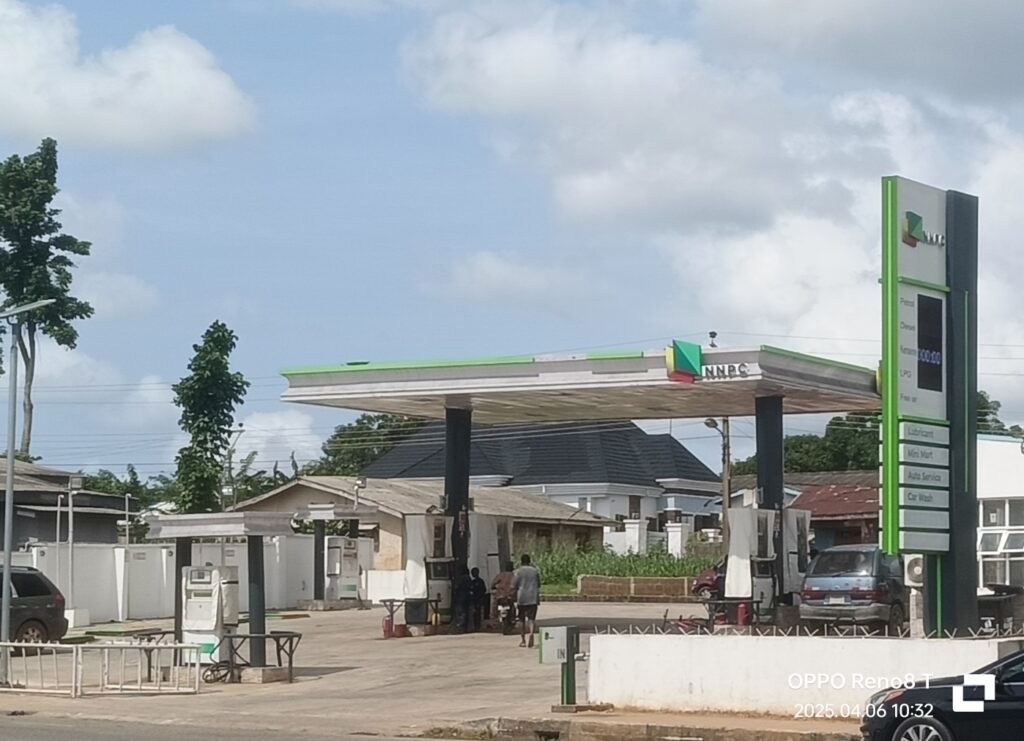
The Nigerian National Petroleum Company Limited (NNPC Ltd) has begun reviewing the circumstances surrounding a fire at an affiliated filling station in Lagos State that destroyed seven classrooms at a neighbouring school, three fuel dispensing pumps and two vehicles.
The fire broke out on Monday, November 16, 2026, at the station along Ekoro-Ajasa Road in the Alimosho area of Lagos. Flames spread from the filling station to the adjoining St. Lawrence Greater Height School before emergency responders brought the situation under control.
NNPC confirmed that no deaths or injuries had been reported based on preliminary information.
In a statement dated November 16, the company’s Chief Corporate Communications Officer, Andy Odeh, said NNPC Retail’s health, safety and environment teams were working with the management of the affiliated station to review the cause of the incident.
The Lagos State Emergency Management Agency (LASEMA) separately reported that preliminary findings pointed to a fire beginning while a tanker was discharging diesel at the station.
However, the precise cause of ignition has not been conclusively established.
Seven Classrooms and Two Vehicles Destroyed
The fire caused substantial damage at the filling station and the adjoining school.
According to LASEMA, the incident destroyed seven classrooms at St. Lawrence Greater Height School, including electrical appliances and other items within the affected areas.
At the filling station, three fuel dispensing machines were destroyed.
A DAF truck and a Toyota Camry were also burnt during the incident.
The school is located close to the filling station near Savannah Bus Stop in the Command area of Lagos.
Although the damage was extensive, emergency officials reported no casualties.
The authorities have not released a comprehensive financial estimate of the losses.
It also remains unclear how soon the affected classrooms can be repaired and whether the damage will require temporary changes to the school’s teaching arrangements.
Those details will be important for parents, students and staff as the school assesses the impact of the incident.
What Caused the Lagos Filling Station Fire?
Initial reports described the incident as an explosion at the filling station.
However, the Lagos State Emergency Management Agency’s preliminary account focused on a tanker that was discharging diesel when the fire started.
LASEMA Permanent Secretary, Dr Olufemi Oke-Osanyintolu, said the flames subsequently spread to the station’s dispensing pumps and the adjoining school building.
The agency’s findings establish the circumstances reported at the early stage of the investigation, but they do not conclusively identify the ignition source.
Determining the precise cause will require examination of the fuel transfer operation and other relevant evidence.
Investigators may need to establish how the fire began, whether safety procedures were followed and how the flames spread beyond the station.
No official finding of negligence, equipment failure or regulatory violation has been established in the statements reviewed.
For that reason, the incident should not be attributed to a specific safety failure before the investigation is concluded.
Firefighters Respond to Emergency in Alimosho
The incident was reported at approximately 12:50 p.m. on Monday.
According to reports citing the Lagos State Fire and Rescue Service, firefighters from Ejigbo, Ikeja and Bolade fire stations arrived at the scene at approximately 1:13 p.m.
LASEMA also deployed its Igando-based emergency response team after receiving a distress call.
Emergency personnel worked to contain the fire and prevent it from spreading further to the school and neighbouring properties.
The response involved several agencies, including LASEMA, the Lagos State Fire and Rescue Service, the National Emergency Management Agency, the Lagos State Ambulance Service and the Lagos State Traffic Management Authority.
The Lagos Neighbourhood Safety Corps and officers of the Nigeria Police Force also participated.
After extinguishing the flames, emergency crews carried out additional operations to reduce the risk of the fire restarting.
The coordinated response helped prevent a more serious incident in an area where the filling station is situated close to educational and residential facilities.
NNPC Confirms Review of Incident
NNPC acknowledged the incident in a statement issued by Andy Odeh on November 16.
The company described the affected outlet as an NNPC-affiliated filling station and confirmed that the fire had been contained.
It commended Lagos emergency responders for their efforts and expressed concern for residents, customers and businesses affected by the outbreak.
According to the company, its retail, health, safety and environment teams are working with the station’s management to review the circumstances surrounding the fire.
NNPC also said it would support the relevant authorities and provide additional information as verified findings become available.
The company’s description of the outlet as an affiliated station is important because it does not, on its own, establish the precise ownership and operational arrangements of the premises.
The review is expected to provide more clarity about the incident, although NNPC has not announced a completion date.
There has also been no confirmed public announcement of compensation arrangements for the school or other affected property owners.
School’s Proximity to Filling Station Raises Safety Questions
The damage to St. Lawrence Greater Height School has brought renewed attention to the risks associated with petroleum retail operations located close to schools and other occupied buildings.
The fire demonstrates how an emergency at a fuel facility can affect properties beyond the station itself.
For schools located near fuel stations, practical emergency preparedness may include accessible evacuation routes, procedures for moving pupils and staff to safety and arrangements for communicating with emergency responders.
However, the available evidence does not establish that the affected school lacked appropriate emergency procedures.
It also does not establish whether the filling station complied with, or breached, the applicable planning and fire-safety requirements.
Those questions require examination by the relevant authorities rather than assumptions based solely on the resulting damage.
Oke-Osanyintolu urged filling station operators and tanker drivers to observe safety regulations, particularly during the discharge of petroleum products.
He also advised school operators to maintain accessible emergency routes and cooperate with first responders during emergencies.
What Happens Next After the Fire?
The immediate emergency has ended, but several issues remain unresolved.
NNPC and the management of the affiliated filling station are reviewing the cause of the outbreak, while the relevant emergency and fire authorities are expected to establish the circumstances surrounding the incident.
The outcome may help clarify whether any equipment, operational or regulatory issues contributed to the fire.
The condition of the damaged classrooms and the arrangements for restoring the school’s facilities also require attention.
As of November 17, there has been no publicly confirmed final investigation report, comprehensive damage valuation or compensation agreement.
Residents and affected businesses will therefore be looking for further information about the investigation and the steps being taken to address property losses.
The incident highlights the importance of emergency preparedness around petroleum retail facilities, particularly where they operate near schools and other occupied buildings.
For now, the confirmed outcome is that the fire was contained without reported casualties, but seven classrooms, three dispensing pumps and two vehicles were destroyed.
The findings of the ongoing review will be important in establishing what caused the fire and what measures may be needed to reduce the risk of a similar incident.
Community
Comments
Keep discussion respectful and relevant. Comments never affect rewards.
No comments yet. Start a respectful conversation.