

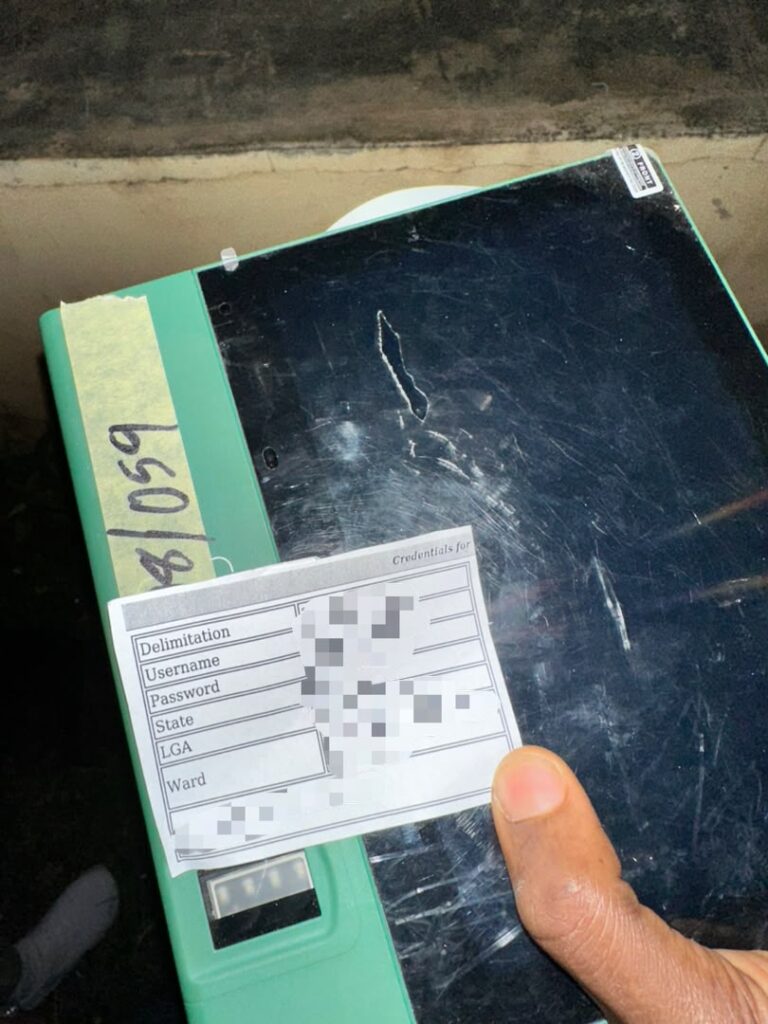
The Independent National Electoral Commission (INEC) has rejected a viral claim that its Bimodal Voter Accreditation System (BVAS) can be remotely logged out before voting ends, insisting that only the polling official operating the device has the authority to control its login and logout functions.
The commission also dismissed allegations that election results uploaded offline could disappear, explaining that polling unit result sheets remain securely stored on the BVAS device until an internet connection becomes available for automatic transmission to the INEC Result Viewing Portal (IReV).
INEC issued the clarification on Monday, November 16, following the circulation of a video on Instagram in which a man claiming to have previously served as a presiding officer raised concerns about the operation of BVAS ahead of Nigeria’s 2027 general elections.
In the video, the individual alleged that election officials could remotely log voters out of the system before the official closing time for voting.
He also warned prospective election workers against uploading polling unit results offline, advising them to take screenshots of result sheets and wait until internet connectivity was restored before completing the upload process.
However, INEC described the claims as false, fabricated and misleading, urging Nigerians to disregard the video and rely on the commission’s official communication channels for election-related information.
INEC Explains Who Controls BVAS Devices
In its statement, the electoral commission explained that each polling unit is assigned unique login credentials, which are issued to the presiding officer on the eve of an election.
These credentials allow the designated polling official to access the BVAS device for voter accreditation on election day and subsequently upload the polling unit result sheet after voting concludes.
According to INEC, only the polling official operating the device has the authority to log in or log out during voter accreditation and the result upload process.
The commission said there is no provision within its stated operating procedures for an external individual or authority to remotely log out a BVAS device.
It therefore rejected the suggestion that officials outside the polling unit could remotely terminate an active accreditation session before the end of voting.
The clarification addresses concerns raised by the circulating video, which suggested that remote control of BVAS devices could be used to interfere with the accreditation of eligible voters.
Can Election Results Uploaded Offline Be Lost?
INEC also addressed concerns about the security of polling unit results uploaded when internet connectivity is unavailable.
The commission explained that it upgraded its INEC Result Viewing Portal application to incorporate an offline upload capability following difficulties experienced during the 2023 general elections.
According to the commission, some presiding officers were held hostage at their polling units during the 2023 elections because poor or non-existent network connectivity prevented them from uploading election results.
The offline upload feature was introduced to address such situations and allow polling officials to complete the upload process without depending on an immediate internet connection.
Under the procedure described by INEC, presiding officers in areas with poor or unavailable network coverage can upload polling unit result sheets offline in the presence of stakeholders at the polling unit.
The uploaded result sheet remains securely stored on the BVAS device pending successful transmission.
INEC further explained that when polling officials move from their polling units to ward collation centres and their devices reconnect to the internet, the stored result sheets are automatically transmitted to the IReV portal.
The process, according to the commission, does not require further manual intervention.
This means that polling officials do not need to abandon an offline upload simply because internet connectivity is unavailable at the polling unit.
However, the commission’s explanation should be understood as its official account of the system’s operating procedures. The statement did not include an independent technical audit or detailed documentation of the device’s security architecture.
Why BVAS and IReV Matter to Nigeria’s Elections
The Bimodal Voter Accreditation System is an important part of Nigeria’s electoral technology infrastructure.
It is used by polling officials to authenticate registered voters during elections and supports the electronic upload of polling unit result sheets.
The INEC Result Viewing Portal provides a platform through which members of the public can view uploaded polling unit result sheets.
Together, the systems are intended to strengthen transparency and make election information more accessible to voters, political parties, election observers and other stakeholders.
The distinction between accreditation and result transmission is important.
BVAS supports voter accreditation during voting and the handling of polling unit result uploads after voting concludes. IReV provides the public-facing platform for viewing the uploaded result sheets.
Consequently, claims about the operation of either system can affect public confidence in the electoral process, particularly when they circulate widely without sufficient verification.
INEC Prepares for Nationwide Mock Accreditation Exercise
The clarification comes as INEC intensifies preparations for the 2027 general elections and works to address concerns arising from the 2023 presidential election.
INEC Chairman, Professor Joash Amupitan, recently announced that the commission would conduct a nationwide mock accreditation exercise on November 28, 2026.
The exercise is intended to test improvements to voter accreditation and electronic result transmission ahead of the next general elections.
Speaking at Chatham House in London on November 12, Amupitan identified insecurity, logistics and result management as three major priorities for the commission’s preparations.
He also disclosed that INEC had introduced additional technical validation safeguards intended to prevent inaccurate results and figures reflecting over-voting from being uploaded to IReV.
The commission has also procured additional BVAS devices and reduced the maximum number of registered voters assigned to an individual device from 1,250 to 850. Polling units with more than 850 registered voters are expected to receive multiple devices.
Amupitan said the mock exercise would help the commission test whether the accreditation and electronic result transmission systems were functioning as intended.
The November 28 exercise will therefore provide another opportunity for INEC to demonstrate the improvements it says have been introduced to its electoral technology.
Public Confidence Remains a Challenge Ahead of 2027
Despite the commission’s explanation, public confidence in Nigeria’s electoral technology remains an important issue as preparations for the 2027 elections continue.
The controversies surrounding the 2023 general election, particularly concerns about electronic result transmission and the handling of results during collation, contributed to criticism of the electoral process.
INEC has acknowledged that the 2023 election created a significant trust deficit and says subsequent reforms are intended to address weaknesses identified through its reviews of earlier elections.
The latest viral video demonstrates how unverified claims about election technology can generate further public concern.
While INEC has rejected the specific allegations, its assurances will need to be supported by transparent procedures, effective testing and credible oversight to strengthen public confidence.
Political parties, election observers, civil society organisations and voters will also have important roles in monitoring the operation of the systems during future elections.
For now, INEC maintains that BVAS devices cannot be remotely logged out by external authorities under its stated operating procedures and that result sheets uploaded offline remain stored until successful transmission to IReV.
With the nationwide mock accreditation exercise scheduled for November 28, attention will increasingly focus on whether the commission can demonstrate that its technological improvements work reliably ahead of the 2027 general elections.

Community
Comments
Keep discussion respectful and relevant. Comments never affect rewards.
No comments yet. Start a respectful conversation.