
Nigeria’s biggest industrial project has entered a new phase.
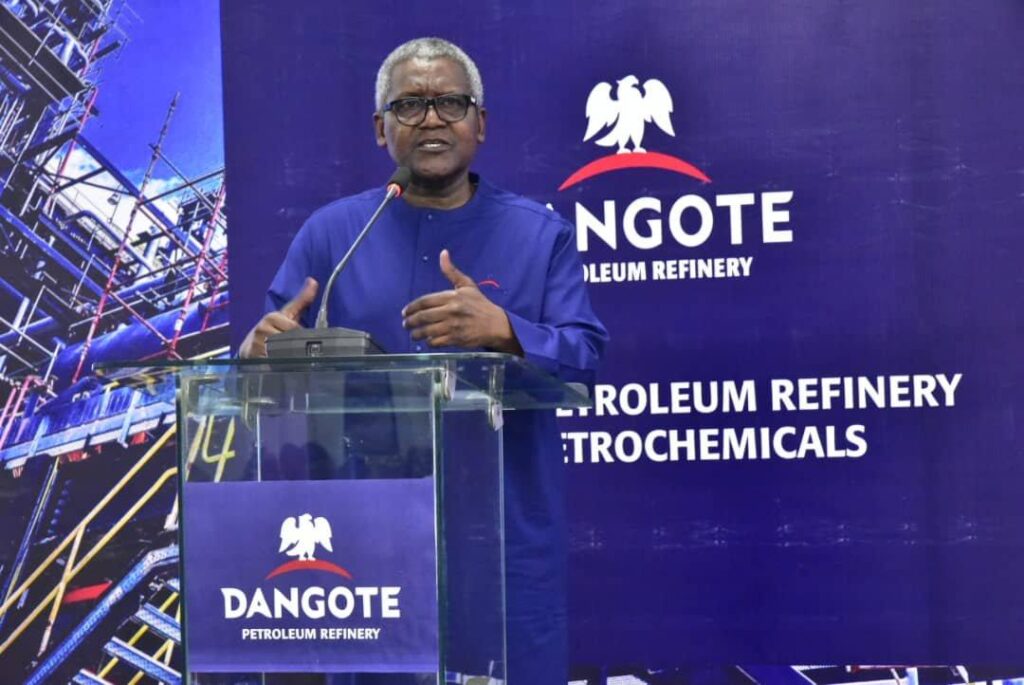
The Dangote Petroleum Refinery and Petrochemicals has opened its initial public offering, giving ordinary investors an opportunity to acquire a stake in the 700,000-barrel-per-day refinery and making the transaction the largest share sale yet recorded in Africa, according to Reuters.
The company is offering 4.1 billion shares at ₦525 each, which would raise about ₦2.15 trillion, or $1.6 billion, if the offer is fully subscribed. The refinery is being valued at roughly ₦63 trillion, or $47.6 billion, at the offer price.
The public offer opened on September 14 and is expected to close on October 13, with trading scheduled to begin later in November, Reuters reported.
A major test for Nigeria’s capital market
The IPO is significant beyond the size of the refinery itself.
Dangote Group is opening part of an asset that was previously privately held to a much wider pool of investors. Reuters reported that approximately 3% of the refinery is being offered to the public, with the transaction designed particularly to give retail investors access.
The minimum investment is deliberately low. Investors can subscribe for as few as 10 shares, meaning the entry point is ₦5,250 before any applicable charges.
That structure makes the offering unusual for an industrial asset of this scale. Rather than limiting participation largely to institutions, the company is seeking broad retail ownership.
The result could also provide a test of how much confidence Nigerian households have in the country’s capital market at a time when many investors are balancing inflation, currency movements and other economic pressures.
What will the money be used for?
The funds raised are intended to support the refinery’s expansion plans.
The facility currently has a stated capacity of 700,000 barrels per day. Dangote plans to increase that capacity to 1.4 million barrels per day, with the expansion expected to be completed by 2029. Reuters previously reported that the planned expansion could cost about $14.3 billion.
The company has also described the refinery as part of a broader industrial strategy involving petroleum products, petrochemicals and other related businesses.
The refinery’s investor materials emphasise its integration with a petrochemical complex and its access to markets across West and Central Africa.
The refinery has already changed Nigeria’s fuel market
The IPO comes after a significant operational transformation.
The refinery, located near Lagos, began operating in 2024 and has a capacity of 700,000 barrels per day. Its emergence has changed Nigeria’s position in the refined-products market, with the country moving from heavy reliance on imported refined petroleum products toward becoming an exporter of some products.
That shift gives the IPO a significance beyond financial markets.
For Nigeria, the refinery represents an attempt to process more crude domestically and reduce dependence on overseas refineries. Its scale also gives the facility a potential role in supplying refined products to other African markets.
The company’s performance has strengthened as operations have expanded. Reuters reported that the refinery recorded $1.82 billion in net profit in the first half of 2026, compared with a loss of $476 million during the same period of the previous year. Revenue exceeded $13 billion.
Investors are buying into both opportunity and risk
The strong interest surrounding the offering reflects the refinery’s size, but investors still have to assess the business on its financial and operational merits.
A large refinery does not automatically guarantee returns for shareholders.
Its performance can be affected by crude-oil prices, refining margins, foreign-exchange movements, maintenance requirements, operating costs, government policies and conditions in international energy markets.
The refinery is also expanding at a time of considerable geopolitical uncertainty.
Recent disruptions in the Middle East have affected global energy markets and raised concerns about refined-product supplies. Reuters reported that the company expects fuel shortages to persist beyond the current Iran conflict because of damage to refining infrastructure and tight global refining capacity.
Those conditions could support refining margins, but they also demonstrate how exposed the business is to international events.
From private investment to public ownership
The IPO follows a private placement completed in July that raised about $2.5 billion for a 6% stake, according to Reuters. The latest offering values the refinery at approximately $49 billion, compared with the roughly $40 billion valuation associated with the earlier transaction.
The move therefore represents more than another fundraising exercise.
It marks a transition from a refinery controlled within Dangote’s privately held business empire toward an asset with broader public ownership.
Reuters reported that Dangote has also indicated that other companies within his conglomerate could eventually be listed and that the refinery could potentially pursue a secondary listing in the United States.
Why the IPO matters to ordinary Nigerians
For Nigerian retail investors, the most immediate attraction is access.
A person who previously could only observe the refinery’s growth can now potentially become a shareholder, subject to the normal risks involved in investing in equities.
For the Nigerian capital market, the transaction provides another opportunity to demonstrate that large domestic companies can raise substantial amounts of capital locally.
For the broader economy, the refinery’s expansion could increase refining capacity, support related industries and strengthen Nigeria’s position in regional petroleum markets.
But the IPO should not be treated as a guaranteed route to profit.
Investors still need to examine the approved offer documents, understand the risks and use properly regulated investment channels. The Securities and Exchange Commission previously warned investors about unauthorised pre-IPO solicitations involving the refinery and advised the public to rely on official regulatory information.
What happens next?
The immediate test is whether the public offer attracts enough demand to reach its targeted ₦2.15 trillion.
The longer-term test will be whether the refinery can convert its enormous production capacity into sustainable profits while financing a planned doubling of capacity.
If successful, the transaction could become an important reference point for future large-scale listings in Nigeria and across Africa.
The Dangote Refinery IPO therefore represents two things at once: a major financing exercise for one of Africa’s largest industrial projects and a test of whether ordinary investors are ready to become owners of the continent’s increasingly important private-sector assets.
Community
Comments
Keep discussion respectful and relevant. Comments never affect rewards.
No comments yet. Start a respectful conversation.